Why was the micro-USB interface replaced by the Type-C interface after decades of use?
 Jul 09, 2021|
 Today, charging cables have become an essential part for our daily use , as a 10+ years experience manufacturer ,we mostly do OEM serice for customers,and we can produce a variety of cables,like long micro usb cable、usb c computer charger,and Today SChitec will share some knowledge about charging cables with you.
Once micro-USB interface is divided into reverse front, when inserting the mobile phone, it always needs to be inserted several times before the link. Today's Type-C interfaces can be plugged in directly, either forward or backward, saving a lot of time and effort, which is why most people like Type-C.
The type-c interface is compatible with older versions of usb2.0/3.0 and supports the USB3.1 standard, with a faster data transfer rate of up to 10Gbps. At the same time, the thinness, portability and expansibility of its ports, coupled with the vigorous promotion by many manufacturers, make the interfaces of the devices gradually unified and become the most mainstream smartphone interface.
The power transmission of a type-C port is bidirectional, which means that it can transmit power in two ways. As a result, Type-C supports bidirectional charging, allowing users to not only charge their mobile devices with their laptops, but also use other devices or portable power sources to charge their laptops.
The new Type-C port has been drastically reduced in size to 8.3 by 2.5mm, making the old USB port 1.4cm long and 0.65cm wide obsolete. It is more suitable for use in increasingly miniaturized computing devices and can withstand 10,000 repeated insertions.
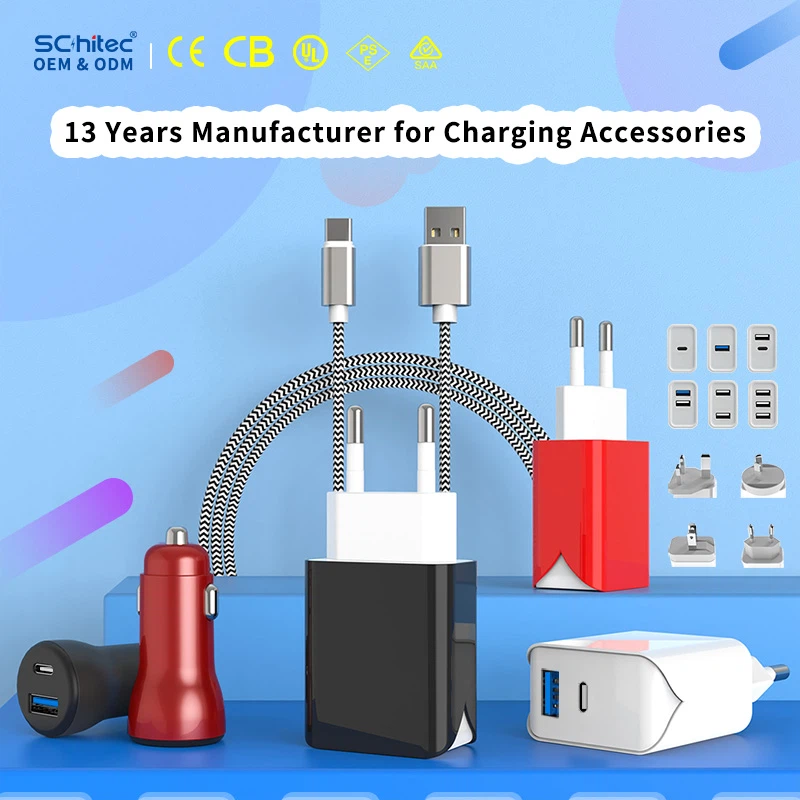
SChitec is a 13 years manufacturer of phone accessories,we supply products to lots of big brands like ANKER for usb charger car,wall charger,usb cables, if you need any product support from us, contact us now !